Data is everywhere. Clear decisions are not.

Turning sensory and consumer data into decision intelligence

Where product experience becomes measurable, comparable, and decision-ready.

Data alone is not enough

In many organizations, sensory and consumer data already exist in large amounts. The challenge lies in how the data was created, what it represents, and how results relate to each other.
Differences in methods, study design, and product context make results difficult to compare or combine, leaving outcomes hard to interpret and use with confidence.
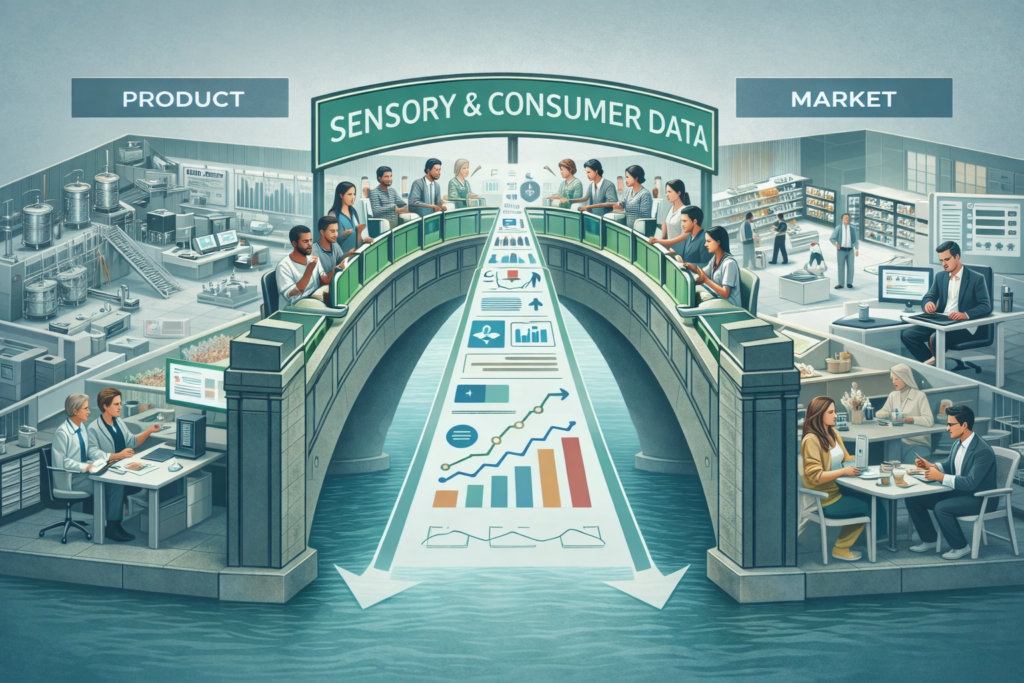
At the same time, sensory and consumer data are the only data types that directly connect product characteristics to real-world consumer response and market outcomes — forming the bridge between product and market.
Without the right data design, structure, and context, this bridge becomes unreliable. Results remain fragmented, their meaning unclear, and their implications uncertain. More data does not solve this problem — it often increases complexity and makes it harder to see what truly matters.

From data to decisions

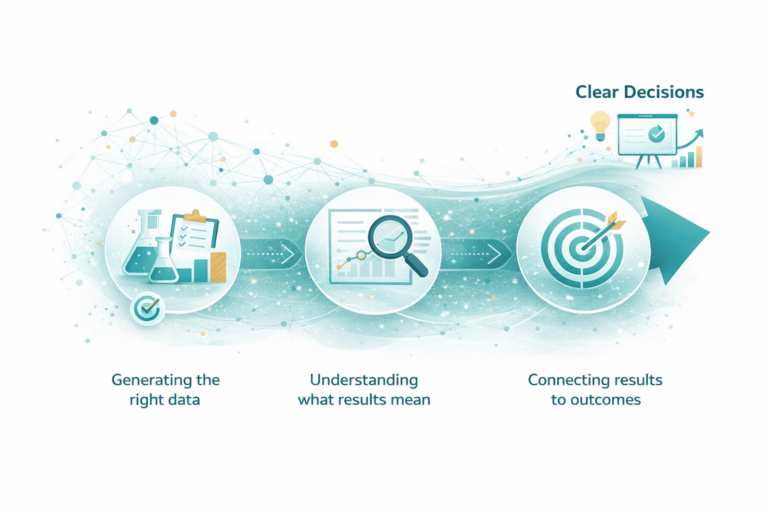
Turning data into clear decisions requires more than collecting results.
It starts with how data is generated — using methods and study designs that reflect real product use, relevant comparisons, and the context in which decisions need to be made.
It continues with how results are analysed and interpreted, ensuring that observed differences reflect real product effects rather than noise or artefacts of the method, and that outcomes can be meaningfully compared across studies.
Ultimately, it requires connecting results to product performance, consumer response, and real-world use, so that findings can be applied with clarity and confidence.

How we work with our clients

Dee-prime logo rainbow blue text
We work closely with our clients to design research and methods that fit their specific context, from early-stage innovation to more established product portfolios. Depending on the need, this ranges from focused project support to longer-term collaboration, including capability building, training, and coaching.
Our role is to bring structure and clarity, by helping teams understand what results mean, how they compare, and how to use them with confidence. The aim is not only to improve individual studies, but to strengthen how data is used across projects and over time.
Where relevant, we embed these principles in tools and systems, developed in collaboration with external partners or clients’ technical teams, to support consistent data use and integration into AI-driven environments.
25+ years of experience in sensory and consumer science, spanning test design, data analysis, and AI-driven approaches.