When Consumers Notice the Difference — Does It Matter?
How consumer sensory segmentation helps estimate opportunity and risk in product change
The Challenge
Product teams often know which sensory attribute they want to improve. A product may need more creaminess, more body, less sweetness, a different texture, or a richer mouthfeel.
The difficult question is not only whether consumers are more satisfied with the changed product on average. It is whether they perceive the change, whether it changes their satisfaction, and for which consumers this matters.
This is especially important when the attribute itself contributes to product quality. A small change in mouthfeel, sweetness, saltiness, or texture may make one group more satisfied, another group less satisfied, and have little effect on consumers who do not consistently notice the difference.
The project focused on bouillon mouthfeel. Could increasing thickness make the product more satisfying? And if so, for whom?
To answer that, we needed to study perception and satisfaction together: who noticed the difference, who became more satisfied, and where the real opportunity and risk of product change sat.

The Approach

A series of bouillon prototypes was developed with controlled differences in mouthfeel thickness. This made it possible to study both consumers’ sensory perception and their satisfaction with products that differed in mouthfeel.
The work combined sensory characterization, sensory panel and consumer discrimination measurements, consumer satisfaction measurement, and consumer sensory segmentation.
Consumers evaluated how satisfied they were with the mouthfeel thickness and body of the products. In addition, discrimination testing was used to understand whether consumers could consistently perceive small differences in mouthfeel thickness.
This allowed us to distinguish between consumers who were satisfied with the current product, consumers who were not satisfied because the current product was not thick enough, and consumers who could or could not consistently notice the differences between products.
What did we observe?
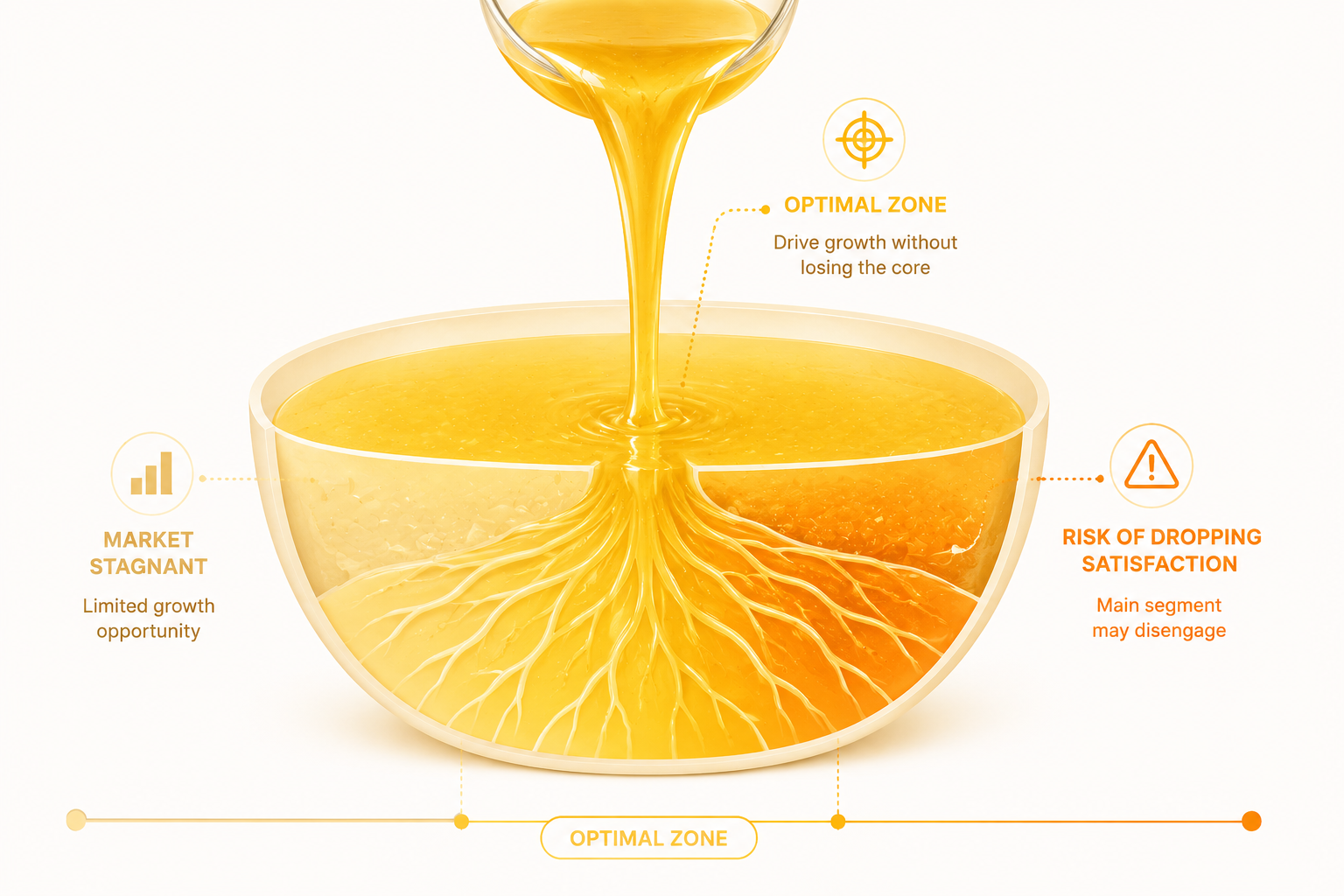
The largest consumer segment was satisfied with the current level of mouthfeel thickness. Importantly, this did not mean that only the current product was satisfying for them. Some slightly thicker products were also satisfying. However, when thickness increased further, satisfaction in this segment started to decrease.
A smaller segment showed a different pattern. These consumers were not satisfied with the current product because the mouthfeel was not thick enough. For them, a thicker mouthfeel increased satisfaction.
The most interesting finding emerged when satisfaction and perception were studied together. The smaller segment that became more satisfied with thicker products was also more sensitive to small mouthfeel differences. Around 80% of this segment could consistently detect subtle differences between products.
In contrast, within the larger segment that was already satisfied with the current product, about half of the consumers could not consistently detect the smaller mouthfeel differences.
What does this mean for decision-making?
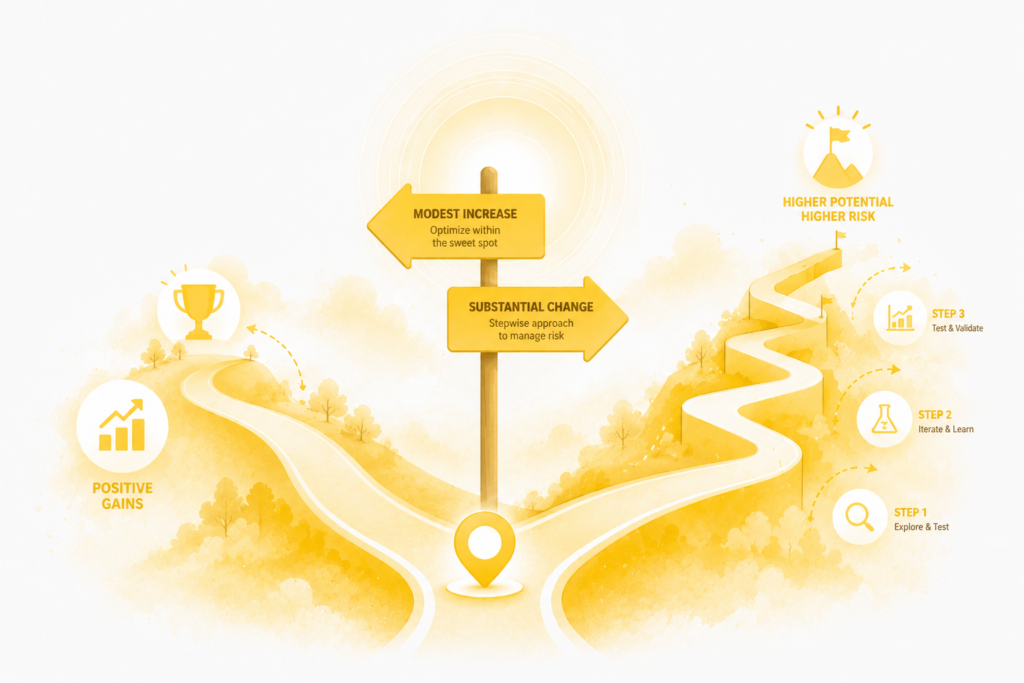
This changed the interpretation of the results. The question was no longer simply whether the total market was more satisfied with a thicker product, but which level of change could increase satisfaction for one consumer segment while keeping satisfaction stable for many consumers in the larger segment.
The findings did not point to a simple “thicker is better” conclusion. They helped identify a more specific opportunity: a modest increase in mouthfeel thickness could make the smaller segment more satisfied, while the larger segment remained satisfied.
More substantial changes would require more caution. As thickness increased further, satisfaction in the larger segment started to decrease. This does not necessarily mean that a further change should never be considered, but it would require a different implementation strategy, for example a more gradual approach.
The results helped clarify how far the product could move before the risk profile changed: how many consumers were likely to notice the change, how many might become more satisfied, and how many might become less satisfied.
Key learning
Consumers do not all experience the same product in the same way.
Some notice differences that others barely perceive. Some become more satisfied with a product change, while others are already satisfied with the current product. And some changes may be small enough to leave satisfaction stable for one group, while still improving satisfaction for another.
The project demonstrated the value of studying perception and satisfaction together. Understanding whether consumers are satisfied is important. Understanding how many consumers can consistently perceive the difference may be equally important.

Shared with the sensory and consumer science community
The research underlying this case study has been published in Food Quality and Preference (DOI: 10.1016/j.foodqual.2019.03.009) and presented and discussed at various international sensory and consumer science conferences.